
Transaction processing phases
Transactions move through several processing phases before they are submitted to the banking network.
During this process the system performs validation checks, queues transactions for processing, and records events that describe the transaction lifecycle.
The following diagram shows the high-level transaction processing pipeline.
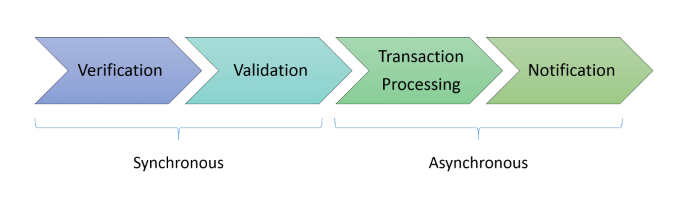
The first stages occur synchronously when the API request is received. After these checks complete, the transaction enters the asynchronous processing pipeline where it is queued, batched, and submitted for settlement.
Balance checks
Funds are not debited from your account immediately when the API request is accepted.
The system performs two balance checks:
- Synchronous check – an initial validation when the request is received
- Asynchronous check – a final balance check when the transaction is processed
Because processing occurs asynchronously, the available balance may change between these checks. A transaction that initially passes validation can therefore still fail later if sufficient funds are no longer available.
If you submit multiple transactions in quick succession, ensure your account holds enough funds to cover the total amount.
Vitesse recommends configuring webhook notifications so your system can reliably track transaction completion and failures. For more information, see Webhooks.
Synchronous phases
Phase 1 – Verification
The system verifies that the request originates from an authorised source and that the request structure is valid.
Verification includes checks such as:
- Validating the API authentication token
- Confirming that the request payload is correctly structured
- Validating basic fields such as currency codes, country codes, and date formats
- Confirming that the calling client has access to the funding account
Phase 2 – Validation
The system validates the transaction against country and payment-method rules.
These rules ensure that the required banking information has been provided and that field formats are correct.
Examples include:
- Validating IBAN length for specific countries
- Checking required banking fields
- Validating field length and format
If validation succeeds, the transaction is accepted for processing and enters the asynchronous pipeline.
Asynchronous phases
Phase 3 – Duplicate checking
The system performs duplicate detection checks to prevent the same payment from being processed more than once.
For more information, see Prevent duplicate transactions.
Phase 4 – Transaction processing
Validated transactions are queued for processing.
During this phase the system:
- Queues the transaction
- Groups transactions into processing batches
- Submits batches to banking partners for settlement
As the transaction progresses, the system records events such as queueing, batching, submission, or failure. These events form the transaction history.
Phase 5 – Notification
After processing completes, the system notifies your integration of the transaction outcome.
This is typically done through webhooks, which send an HTTP POST request when a transaction reaches a final state.
For more information, see Webhooks.
Updated 4 months ago